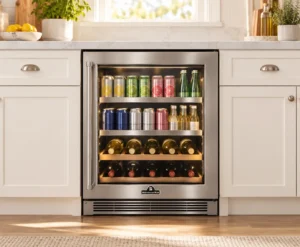
KitchenAid dishwashers, ranges, refrigerators, microwaves and ice makers in Brazoria homes are our job. Book by form or phone and the technician rings when heading your way.

Local housing, power events, water conditions, and installation styles all affect how we approach KitchenAid diagnostics here.
John Austin laid out the town in 1828 on land from Stephen Austin, but the railroad went elsewhere and Angleton took the county seat in 1897. Oil and sulfur strikes in 1939, together with a new bridge over the Brazos, revived the place.
Within just 2.7 square miles, many houses have seen several appliance swaps. Old hookups tell us as much as the machines do.
Hoping to slow land subsidence, Brazoria and six other cities began buying Brazosport Water Authority surface water in 1985. The system now serves roughly 3,200 people and is run by four licensed operators.
Even treated surface water can leave sediment on inlet screens. We clean them whenever a KitchenAid unit fills slowly.
Bottomland beside the nearby Brazos holds humidity in the air through much of the year. A dishwasher beside a windowless sink can hold steam long after the cycle ends.
Cracking the door once drying finishes lets a KitchenAid dishwasher vent that steam. If cabinets stay damp, we point it out before the wood suffers.
Brazoria kitchens we visit mostly have a standard 24-inch slot for the dishwasher. Ranges are freestanding, and the laundry lives in a utility room or garage.
Mismatched hoses and fittings turn up where several swaps have happened. Supply lines, drain connections and the power cord all get checked.
Highway 36 runs through Brazoria, 16 miles from Freeport and 41 from Rosenberg. We pair it with West Columbia or Sweeny on one day. Pick a phone number you will answer that morning, since the technician rings first with an arrival time.
In smaller, older houses the connection is frequently the real culprit rather than the appliance. Rubber washer hoses crack with age, and a dishwasher line reused across two replacements can drip behind the toe kick. Have us check hoses and fittings, and call a plumber if water has already reached the subfloor.
Rubber hoses past a few years old should go. Cracks usually start on the inside where you cannot see, and braided lines can be fitted during any visit.
Look under the sink for a loose supply fitting, then behind the toe kick for a damp spot. Report what you see and we load the probable parts.
A confirmation goes out the day before, and a call comes when the technician leaves. Should a route change, we tell you and rebook instead of keeping you waiting.