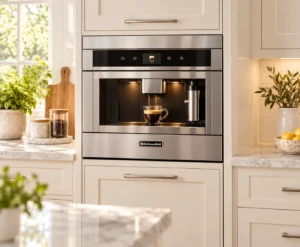
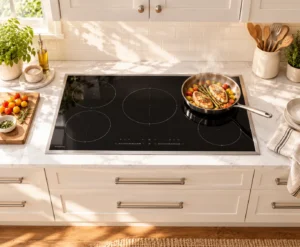
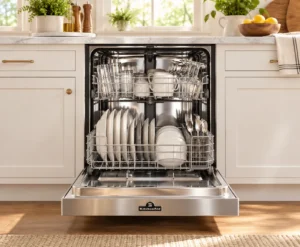
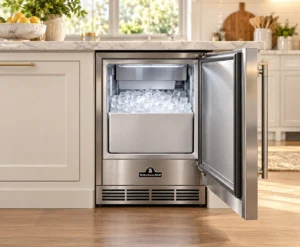
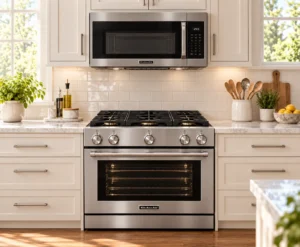
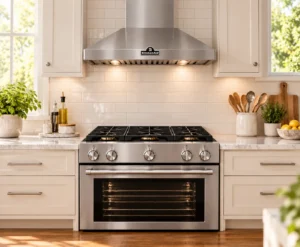
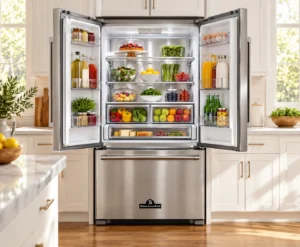
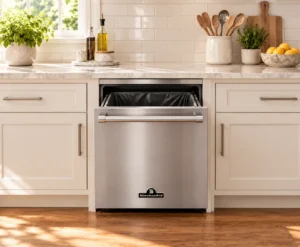
Shoreacres residents call us for KitchenAid dishwashers, induction and gas cooktops, counter-depth refrigerators and ice makers. A call or the online form gets you a firm three-hour slot.

Local housing, power events, water conditions, and installation styles all affect how we approach KitchenAid diagnostics here.
Less than a square mile of bayfront land makes up Shoreacres, which incorporated in 1949 and is nearly all single-family housing. Floodplain management and building inspections are handled by the city itself.
That local oversight shapes how flood-damaged houses get rebuilt. When we add or swap a KitchenAid appliance, we match the cutout and utility connections to what the rebuild left behind.
Created in 1981, the La Porte Area Water Authority sells Shoreacres treated surface water drawn from its stake in Houston's Southeast Water Purification Plant. Two neighboring cities use the same supply.
In rebuilt kitchens the supply line and shutoff valve are often new, so a weak dispenser is more likely a kinked line or a filter that was never changed. We check those before anything else.
Carla in 1961, Alicia in 1983 and Allison in 2001 all missed many of these houses, but Ike in 2008 flooded about 88 percent of the 693 homes. Some residents took a year or more to come back.
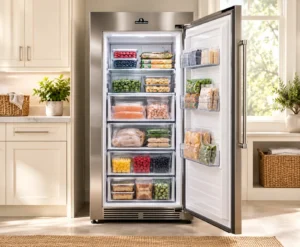
Floor-level appliances and garage freezers are the likeliest to have been wet in a storm like that. If a KitchenAid unit has been in water, tell us, because we dry and test it before powering up.
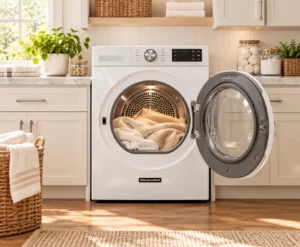
After rebuilding, kitchens tend to include newer dishwashers, induction or gas cooktops and counter-depth refrigerators. Raised houses may put the laundry upstairs.
A drain pan and a leak sensor under an upstairs washer are cheap protection. Newer induction cooktops also need a proper 240V circuit, which we confirm before diagnosing the burner.
Shoreacres sits along SH 146 inside city limits that take in less than a square mile. A technician from our bay routes typically arrives within a day or two. Tell us if the kitchen is upstairs, since stairs change how we bring tools and parts.
A house that flooded and was rebuilt may have wiring and plumbing of mixed ages. When an induction burner shows no pan, a French door refrigerator runs warm or a range clicks without a flame, we test the appliance first. Should the cause sit in the wall, in a receptacle or a supply line, an electrician or plumber should take over, and you see the price first.
Water sitting in a trap or a drain hose with a low loop is the usual cause. We clean the filter and sump, fix the hose loop and check that it drains fully.
Overheating pans or a blocked cooling fan can trip it. Make sure the vents beneath are clear. If it keeps happening, we test the fan and temperature sensor.
Check cords, outlets and low panels for corrosion. We inspect and test any appliance that sat in water before you rely on it.